

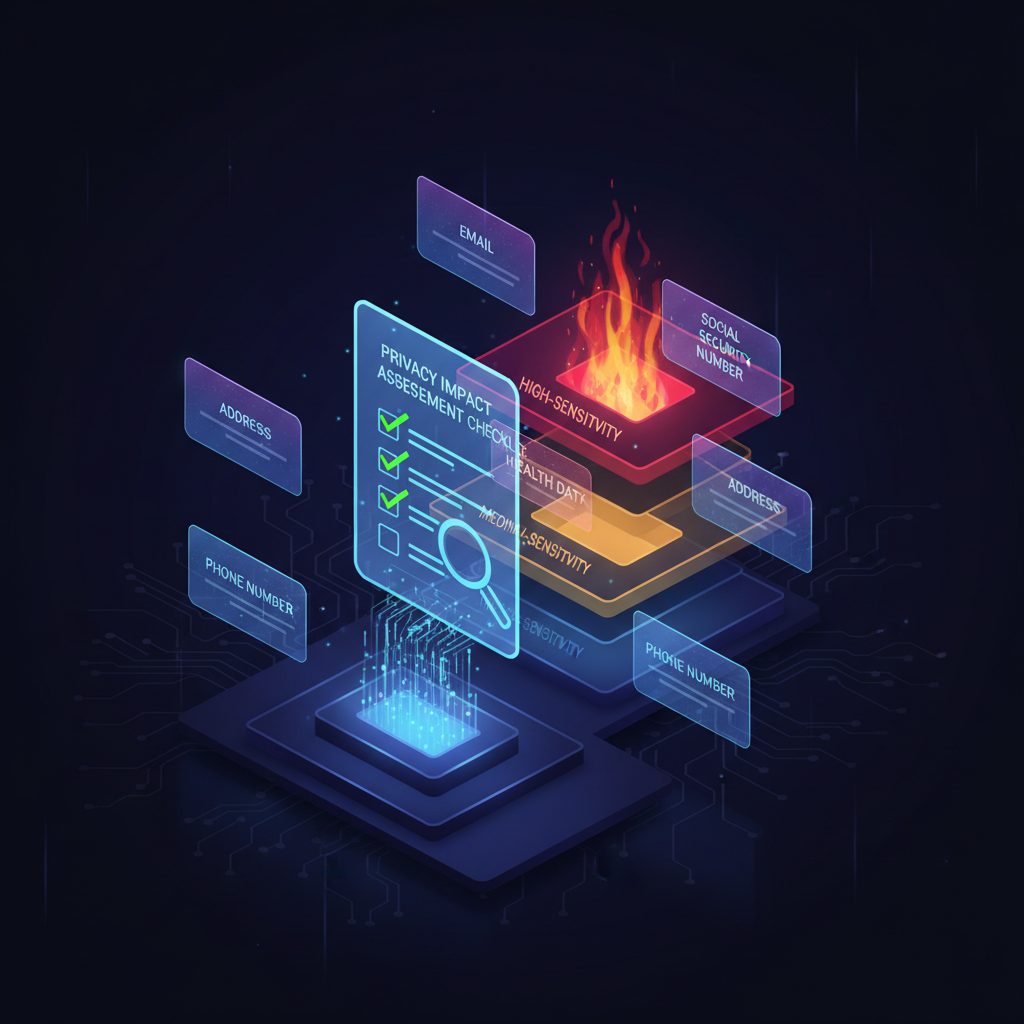
IBM's 2026 Cost of a Data Breach report put the average breach cost at $4.88 million — and the majority of those breaches involved some form of personally identifiable information. Yet organizations still struggle to define exactly what PII is, where it lives, and how to protect it systematically. That is a serious problem.
If you cannot define PII precisely, you cannot classify it correctly. If you cannot classify it, you cannot govern it. And if you cannot govern it, you are exposed — legally, financially, and reputationally. This guide cuts through the noise.
What Is PII?
PII stands for Personally Identifiable Information. It refers to any data that can be used, alone or in combination with other information, to identify a specific individual. The National Institute of Standards and Technology (NIST) defines PII in SP 800-122 as information that can distinguish or trace an individual's identity, either directly or when combined with other personal or identifying data.
That last clause matters enormously. A single field — say, a job title — might seem harmless. But combine it with a ZIP code and a birth month, and suddenly you can uniquely identify someone in a dataset with high probability. This is what researchers call a quasi-identifier attack, and it is why the combination aspect of PII definitions is not just legal boilerplate.
Direct vs. Indirect PII
Security teams typically split PII into two categories. Direct PII identifies someone on its own: full name, Social Security number, passport number, driver's license number, biometric data, email address. These are high-sensitivity by default.
Indirect PII requires linkage to become identifying: ZIP code alone, date of birth alone, gender alone, IP address in most contexts, device identifiers, employer name. Individually low-risk, but trivially combinable into a profile.
Under GDPR, the EU framing is slightly different — it uses personal data as the governing term, which is broader than the US NIST definition of PII. Under Article 4(1), personal data means any information relating to an identified or identifiable natural person. An IP address qualifies. A cookie ID qualifies. Even an inference about political opinion qualifies if it can be traced back to a person.
Which of the Following Is Not an Example of PII?
This question appears constantly in compliance certifications and security awareness training. The short answer: aggregated, truly anonymous, or non-attributable data is not PII.
Examples that are not PII include: a company's revenue figures, generalized demographic statistics such as 40 percent of users are between 25 and 34, a business's EIN or tax ID, publicly available general information not linked to any individual, and fully anonymized research datasets where re-identification has been provably prevented.
What trips people up: a work email address like john.smith@company.com is PII even though it contains a company domain. A dynamic IP address is PII under GDPR. A photograph of a crowd is PII if individuals in it are identifiable — especially with modern facial recognition capabilities.
The test is always: can this data, alone or in combination, reasonably identify a natural person? If yes, treat it as PII until you have completed a proper de-identification analysis.
Categories of PII: From Sensitive to Low-Risk
Not all PII carries equal risk. NIST SP 800-122 and most enterprise data classification frameworks break PII into tiers:
High Sensitivity PII: Social Security numbers, financial account numbers, medical records (PHI under HIPAA), biometric identifiers such as fingerprints and retina scans, genetic data, passwords and authentication credentials, precise geolocation history, racial or ethnic origin data.
Medium Sensitivity PII: Full names combined with addresses, email addresses, phone numbers, employment history, educational records, IP addresses, device fingerprints, purchase histories.
Lower Sensitivity PII: First name alone, general geographic regions at city level, publicly posted social media profiles, professional titles. Low sensitivity does not mean low risk — context always governs.
The reason this tiering matters: your incident response obligations, breach notification timelines, encryption requirements, and data retention policies should all scale with PII sensitivity. Under GDPR, a breach involving special categories of data such as health, religion, or sexual orientation triggers stricter notification rules than a breach of business email addresses.
What Is a Privacy Impact Assessment?
A Privacy Impact Assessment (PIA) — sometimes called a Data Protection Impact Assessment (DPIA) under GDPR — is a structured process for identifying, evaluating, and mitigating privacy risks before a new system, process, or technology is deployed.
The core purpose: catch privacy problems while they are cheap to fix, not after you have shipped. A PIA forces teams to document what PII is being collected, why it is being collected, how it flows through systems, who can access it, how long it is retained, and what controls are in place. Done correctly, it is both a compliance artifact and a practical security exercise.
What Is the Purpose of a Privacy Impact Assessment?
PIAs serve several distinct functions. First, they are a risk identification mechanism — you cannot mitigate risks you have not named. Second, they generate documented evidence of due diligence, which regulators and auditors expect to see. Third, they create organizational accountability by forcing business owners to sign off on data flows they may not have consciously approved before.
Under GDPR Article 35, DPIAs are mandatory for processing activities that are likely to result in a high risk to the rights and freedoms of natural persons. This includes large-scale processing of sensitive data, systematic monitoring of public spaces, and profiling with legal or significant effects. Missing a required DPIA is not a technicality — the ICO in the UK and CNIL in France have both issued fines specifically for DPIA non-compliance.
Beyond regulatory mandates, PIAs are genuinely useful. They surface hidden data flows — the analytics SDK that sends user IDs to a third party, the log file that captures IP addresses longer than policy allows, the microservice that caches PHI in plaintext. These are the kinds of findings that prevent breaches, not just audits.
Which of the Following Must Privacy Impact Assessments Do?
This is a common exam question in certifications like CIPP/US, CIPP/E, and CompTIA Security+. The authoritative answer, drawn from NIST SP 800-53 (RA-8) and GDPR Article 35, is that PIAs must accomplish the following:
1. Identify the PII being collected and processed. Every category, every field, every system. No gaps.
2. Describe the purpose and legal basis for processing. Legitimate interest, consent, or contractual necessity — this has to be explicit.
3. Assess privacy risks to individuals. Not just organizational risk — the rights and freedoms of the people whose data is being processed.
4. Document safeguards and controls in place. Encryption, access controls, pseudonymization, and data minimization measures.
5. Establish a review and update mechanism. A PIA completed at launch and never revisited creates false assurance and is worse than useless.
6. Consult with a Data Protection Officer (DPO) where required. Under GDPR, DPO involvement in high-risk DPIAs is not optional.
Privacy Impact Assessment Template: What It Should Cover
A solid PIA template is not a checkbox form — it is a structured investigation. Here is what it needs to address in practice:
Section 1 — Project Overview: What system or process is being assessed? What is the business purpose? Who owns it? What is the deployment timeline?
Section 2 — Data Inventory: What PII is collected? Source of collection including user input, API, or third party? Data formats? Storage locations? Is there a data flow diagram?
Section 3 — Legal Basis and Consent: Under which legal basis is processing occurring? Is the consent mechanism documented and auditable? Are data subject rights such as access, erasure, and portability supported?
Section 4 — Data Flows and Third Parties: Where does data travel? Are processors under Data Processing Agreements? Are there cross-border transfers, and if so, what mechanisms apply such as SCCs or adequacy decisions?
Section 5 — Risk Assessment: For each identified risk, document likelihood, severity, and impact to individuals. Use a risk register format, not prose.
Section 6 — Mitigating Controls: What technical and organizational measures reduce each risk? This is where tools like Secret Detection and SAST scanning become directly relevant — automated checks that catch PII leaking into logs, code repositories, or misconfigured cloud storage.
Section 7 — Residual Risk and Sign-Off: After controls, what risk remains? Who accepts it? DPO sign-off where applicable.
Section 8 — Review Schedule: When will this PIA be revisited? What events trigger a review such as new data types, new processors, or regulatory changes?
PII and Cloud Environments: The Harder Problem
On-premise PII governance is already complex. Cloud environments multiply that complexity by an order of magnitude. PII ends up in S3 buckets, database snapshots, container logs, CI/CD pipeline artifacts, and model training datasets. Blast radius from a misconfiguration is measured in millions of records, not thousands.
This is precisely where continuous cloud security posture monitoring becomes essential. CSPM tools can detect publicly exposed storage buckets, overly permissive IAM policies, and encryption gaps — all of which are preconditions for PII exposure. But CSPM alone does not tell you whether PII is actually present in those resources. That requires data classification capabilities layered on top.
Most organizations are still treating PII governance as a policy problem when it is fundamentally a data discovery and engineering problem. You need to know where your PII is before you can protect it. Static data maps built in spreadsheets go stale within weeks in cloud-native environments.
Container workloads deserve specific attention. Environment variables, application logs, and heap dumps routinely contain PII that developers did not intend to persist. Container Image Scanning as part of your pipeline catches hardcoded credentials and secrets — extending that posture to PII patterns is the next logical step in a mature data privacy program.
PII Under Major Regulatory Frameworks
Different frameworks define and protect PII differently. Understanding the overlaps and gaps matters for organizations operating across jurisdictions.
GDPR (EU): Broadest definition. Any information relating to an identifiable person. Special categories including health, biometrics, race, religion, sexual orientation, and political opinion face heightened restrictions. DPIAs mandatory for high-risk processing. Breach notification within 72 hours to supervisory authority.
CCPA/CPRA (California): Covers consumers; excludes employee data in some contexts. Right to know, delete, and opt-out of sale. The sensitive personal information category added by CPRA partially mirrors GDPR's special categories.
HIPAA (US Health): Defines PHI as a subset of PII tied to healthcare. 18 specific identifiers must be removed for safe harbor de-identification. Covered entities and business associates are both liable.
NIST SP 800-122: The federal US standard for PII protection in government systems. Forms the basis for most FedRAMP and FISMA compliance requirements. PIAs required for all federal information systems involving PII.
Our Compliance platform is built around these frameworks — mapping controls to regulatory requirements so security teams spend time fixing gaps rather than maintaining spreadsheets.
Practical Steps: Protecting PII in 2026
Here is what a functioning PII protection program actually looks like in practice:
Data discovery first. You cannot protect what you cannot find. Automated scanning of cloud storage, databases, and repositories for PII patterns should run continuously, not annually. Tools like Cloud Inventory give you asset visibility as a foundation.
Classify before you store. Tag PII at ingestion. High-sensitivity PII should trigger automatic encryption, access control enforcement, and retention policy application. Do not rely on manual tagging at scale.
Minimize collection aggressively. Data minimization is not just a GDPR principle — it is a security principle. Every field you do not collect is a field that cannot be breached. This is also where Policy-as-Code enforcement matters: define data handling rules as code, enforce them in CI/CD pipelines, and catch violations before they reach production.
Run PIAs early and often. Shift-left applies to privacy, not just security. A PIA started after a feature ships is a post-mortem, not a risk assessment. Build PIA checkpoints into your product development lifecycle at the design stage.
Test your controls. Encryption at rest is table stakes. But is it enforced everywhere? Are there unencrypted replicas? Are backup snapshots protected? Vulnerability Management programs should explicitly include PII exposure scenarios.
Train your developers. Most PII leaks through logs, error messages, and debug output written by developers who did not realize they were logging sensitive data. Security awareness training specifically targeting PII handling in code has measurable impact on incident rates.
Common PII Mistakes That Lead to Breaches
Logging PII in plaintext. This happens in virtually every organization with a legacy codebase. A stack trace that includes a user's email or session token is a breach waiting for a log management incident.
Over-retaining data. Keeping PII longer than necessary multiplies your exposure window. If you suffer a breach, every record retained beyond your stated policy is additional liability.
Weak de-identification. Removing obvious identifiers like name and SSN while retaining quasi-identifiers such as ZIP code, date of birth, and gender does not constitute de-identification. Research by Latanya Sweeney showed 87 percent of Americans could be uniquely identified using just ZIP code, birthdate, and sex — that reality has only worsened with richer datasets.
Ignoring third-party processors. A Data Processing Agreement with a vendor does not automatically make them compliant. Vendor security assessments should explicitly audit how subprocessors handle PII. Cloud Security posture assessments of third-party environments are increasingly expected by regulators.
The bottom line: PII governance is not a one-time compliance project. It is an ongoing engineering discipline that requires automated tooling, clear ownership, and a culture that treats personal data as a liability to be minimized, not an asset to be hoarded.