

The NVD published over 40,000 CVEs in 2025. Not a typo. And 2026 is pacing ahead of that. Most security teams are drowning in scanner output while the vulnerabilities that actually get exploited slip through the noise. The problem is not finding vulnerabilities anymore — every scanner worth its license fee can do that. The problem is knowing which ones to fix first, and doing it fast enough to matter.
This guide cuts through the vendor noise and focuses on what actually works: how modern vulnerability scanning tools fit into a real security program, what differentiates signal from noise, and how teams using risk-based approaches are closing remediation gaps 60 to 70 percent faster than those chasing CVSS scores alone.
Why Traditional Vulnerability Scanning Fails Modern Environments
Legacy network vulnerability scanners — the kind that fire off unauthenticated TCP probes against IP ranges — were designed for flat, on-premise networks. They are not useless, but applying that same mental model to a Kubernetes cluster running 400 microservices in a multi-cloud setup is like using a metal detector to find a needle in a digital haystack.
The core failures are predictable. First, scan coverage degrades in ephemeral environments. A container spun up at 2 AM and terminated by 2:15 AM never gets scanned by a weekly-cadence tool. Second, raw CVSS scores do not reflect exploitability in your specific environment. A CVSS 9.8 RCE vulnerability in a library that is loaded but never called externally is materially less dangerous than a CVSS 7.2 auth bypass in a publicly exposed API. Third, siloed tools create remediation blind spots — one scanner sees the host, another sees the container image, and neither talks to the developer who can actually fix it.
Modern vulnerability scanning tools solve at least some of these gaps. The best ones solve all three.
The EPSS Scoring Model: Why CVSS Alone Is Not Enough
FIRST's Exploit Prediction Scoring System (EPSS) has become the de facto complement to CVSS for any team serious about vulnerability management. Where CVSS measures theoretical severity, EPSS measures the probability that a vulnerability will be exploited in the wild within the next 30 days — a number derived from real-world threat intelligence, NVD data, and OSINT sources.
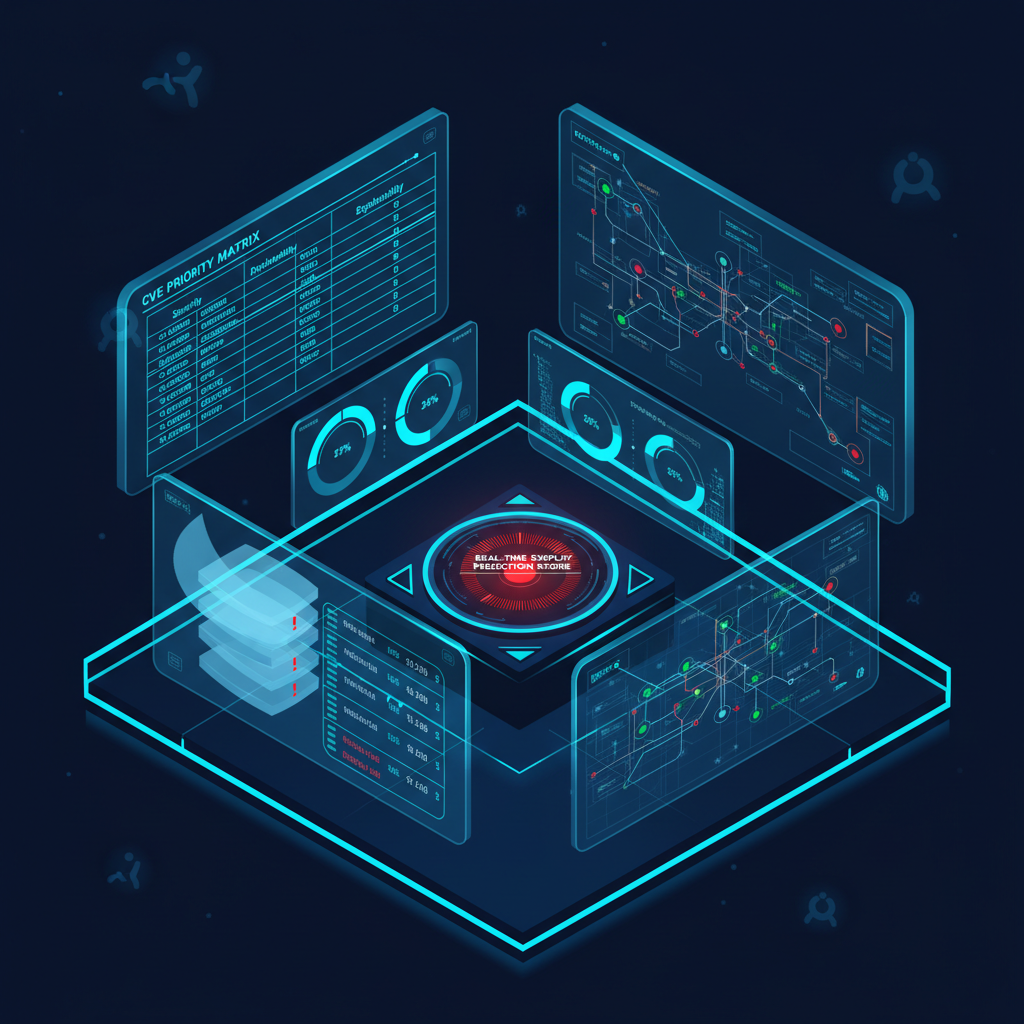
The numbers are stark. Roughly 4 to 7 percent of published CVEs ever see active exploitation. EPSS scores above 0.1 should trigger immediate triage regardless of CVSS. Combined with CVSS, EPSS lets teams create a two-dimensional risk matrix that is actually predictive rather than just descriptive.
In practice, teams using EPSS-weighted remediation prioritization reduce their critical backlog by 40 to 60 percent compared to CVSS-only approaches — because most CVSS 9-plus vulns simply never get weaponized in the real world. That is not an argument for ignoring high-CVSS findings; it is an argument for being surgical about where you spend remediation hours.
CISA's Known Exploited Vulnerabilities (KEV) catalog is the other pillar. If a CVE appears in KEV, it is exploited in the wild. That should override any EPSS threshold in your escalation policy.
Vulnerability Scanning Tool Categories in 2026
Network Vulnerability Assessment
Network scanners remain foundational. Tools like Nessus Professional, Qualys VMDR, and Rapid7 InsightVM dominate enterprise deployments. What separates the good from the mediocre in 2026 is authenticated scan depth, agent-based coverage for endpoints that do not sit on the corporate network, and API-driven integration with ticketing and SOAR platforms.
For continuous network vulnerability scanning at scale, scan frequency matters as much as scan depth. Weekly scans miss the attack surface expansion that happens between Monday and Friday in a dynamic cloud environment. Agentless approaches using cloud APIs — querying AWS EC2 metadata, Azure Resource Graph, GCP Asset Inventory — complement scheduled scans and fill the gaps. You can explore how VM Scans handle this continuous cadence requirement in practice.
Web Application Vulnerability Scanning
DAST tools probe running applications from the outside — exactly how an attacker would. OWASP ZAP, Burp Suite Enterprise, and Invicti are the dominant tools here. They cover OWASP Top 10 categories: injection, broken access control, security misconfiguration, and cryptographic failures among them.
The integration point that matters most is CI/CD pipeline embedding. A DAST scan that only runs quarterly in a manual engagement is better than nothing, but it is not a security program. Automated DAST triggered on each staging deployment, with results fed back to developers as PR comments, is the shift-left model that actually reduces time-to-fix for application-layer vulnerabilities.
SAST complements DAST by catching vulnerabilities in source code before deployment. The SAST capabilities in modern platforms can identify injection flaws, hardcoded secrets, and insecure deserialization patterns before they ever reach production.
Container Security Scanning
Container image scanning is non-negotiable in 2026. The average container image pulls from 300 or more open source packages. Each one is a potential CVE surface. Trivy, Grype, and Snyk Container scan images at build time and registry pull time, comparing package manifests against NVD, GitHub Advisory Database, and distro-specific advisories.
The more sophisticated capability is runtime scanning — detecting vulnerabilities in containers that are actively running in production, not just at build time. This matters because base images drift. An image scanned clean at build might be running a package that received a critical CVE three weeks later.
The Container Image Scanning module handles this lifecycle problem: scanning at build, at registry push, and continuously monitoring running workloads against updated CVE feeds. The blast radius of a compromised container in a microservices architecture is significant — lateral movement between pods in the same namespace is straightforward if the initial container is compromised via an unpatched vulnerability.
Secret Detection and Code-Level Risk
Vulnerability scanning does not stop at the infrastructure layer. Source code repositories routinely contain hardcoded API keys, database credentials, and OAuth tokens — credentials that are functionally equivalent to unpatched vulnerabilities because they provide direct attacker access. Secret Detection tools scan git history, not just the current HEAD, because secrets committed and deleted remain in commit history and are trivially recoverable.
The SAST layer catches code-level vulnerabilities before they ship: SQL injection, path traversal, insecure cryptographic algorithms, and XML external entity injection patterns. Combined with secret detection, these form the code security pillar of a complete vulnerability management program.
Attack Surface Management: The Macro View
Individual scanners see their slice of the environment. Attack surface management tools try to see what an attacker sees — the full external footprint of an organization, including assets the security team did not know existed.
Shadow IT is the canonical problem. A developer spins up an S3 bucket with public read access. A forgotten EC2 instance running an end-of-life version of Apache. A subdomain pointing to a decommissioned service. ASM tools discover these through continuous internet-facing reconnaissance — DNS enumeration, certificate transparency log monitoring, BGP routing table analysis — and correlate findings with vulnerability scan data.
The Cloud Inventory capability addresses a specific subset of this: ensuring that every cloud resource across AWS, Azure, and GCP is tracked, tagged, and visible. Unmanaged assets cannot be scanned. Unscanned assets are undefended.
Risk-Based Vulnerability Management: Building the Program
Risk-based vulnerability management (RBVM) is the methodology that ties all the scanning tools together into a coherent program. The core idea is simple: not all vulnerabilities are equal, and remediation resources are finite. RBVM uses context — asset criticality, exposure, threat intelligence, EPSS scores, business function — to generate a prioritized remediation queue.
The architecture of a mature RBVM program typically looks like this:
- Continuous scanning: Agentless cloud scanning plus agent-based endpoint coverage running on sub-weekly cadence
- Enrichment: Every finding enriched with EPSS score, KEV status, CVSS vector, asset criticality tier, and reachability analysis
- Prioritization engine: Weighted scoring combining exploitability, asset value, and exposure — not just raw severity
- Remediation workflow: Findings automatically routed to the right team with SLA tracking per severity tier
- Patch management integration: Scanner data feeds directly into patch management strategy tooling, closing the loop between detection and fix
CISA's Binding Operational Directive 22-01 mandates 15-day remediation windows for KEV catalog entries in federal environments. Many private sector organizations have adopted similar standards: 15 days for KEV and critical exploitable findings, 30 days for high with EPSS above 0.1, 90 days for everything else. The exact numbers matter less than having them at all and tracking adherence.
Integrating Scanning Into the DevSecOps Pipeline
The most effective vulnerability management programs do not treat scanning as a periodic audit function. They embed it into every stage of the software delivery lifecycle. That means SCA at dependency install, SAST at PR submission, container scanning at image build, and DAST at staging deployment. Findings that would take weeks to remediate after a quarterly pen test get caught in minutes and fixed in the same sprint they are introduced.
Scanner findings need to flow into Jira, ServiceNow, or whatever ticket system developers actually use — not sit in a security portal that nobody opens except during compliance reviews. Bidirectional sync, SLA alerting, and escalation workflows are what turn a scanner into a remediation program.
For teams that want comprehensive cloud security coverage alongside vulnerability management, integrating CSPM findings with vulnerability data creates a unified risk view. A misconfigured security group that exposes a host running an unpatched service is a compound risk — the misconfiguration amplifies the vulnerability's exploitability. Seeing both in the same context is significantly more actionable than two separate dashboards.
Penetration Testing vs. Vulnerability Scanning
Penetration testing and vulnerability scanning are complementary, not interchangeable. Scanners are automated, continuous, and broad. Penetration testing is manual, periodic, and deep. A skilled red team will find chained vulnerabilities, business logic flaws, and attack paths that no automated scanner will ever surface — because they require human creativity and contextual understanding.
The practical model: use continuous vulnerability scanning to maintain a managed attack surface, and use penetration testing to validate your defenses against realistic adversary behavior. MITRE ATT&CK provides the framework for structuring pentest scenarios around real threat actor TTPs.
RBVM programs that use pentest findings to calibrate their prioritization models get smarter over time. If red teams consistently find gaps in a specific asset class, that asset class gets elevated criticality weighting in the scanner prioritization engine. The feedback loop is the point.
Open Source Vulnerability Management Tools Worth Knowing
Not every team has budget for enterprise scanners. The open source ecosystem has matured significantly. Trivy from Aqua Security covers container images, filesystems, git repos, and Kubernetes clusters with a single binary. OpenVAS (now Greenbone Community Edition) covers network scanning. Grype from Anchore handles container and filesystem SCA. DefectDojo provides the vulnerability management platform layer — aggregating findings from multiple scanners, tracking remediation, and reporting metrics.
The limitation of open source tooling is operational overhead. Someone needs to maintain the deployment, update signatures, manage false positive tuning, and build the integrations. For resource-constrained teams, that operational cost often exceeds the license cost of a managed platform — worth factoring into the build-vs-buy analysis honestly.
The Vulnerability Management solution at Secrails consolidates scanning, prioritization, and remediation workflow into a single platform — reducing the integration tax that comes with stitching together five different open source tools.
The 2026 Threat Landscape and What It Demands
AI-generated exploit code has lowered the skill floor for exploitation. What used to require a competent exploit developer can now be scaffolded with LLM assistance. This compresses the window between CVE publication and weaponized exploit availability. Median time from CVE publication to first exploitation attempt is now under 72 hours for high-profile vulnerabilities.
That compression changes the RBVM math. A 30-day remediation SLA for critical vulnerabilities that become exploited within 72 hours of disclosure is a program design flaw. Continuous vulnerability scanning with automated detection and escalation is the minimum viable capability for keeping pace with the current threat environment.
Teams serious about staying ahead of this curve are adopting continuous cadence scanning rather than scheduled windows, ensuring that newly published CVEs are detected across the estate within hours rather than weeks. Combined with a mature patch management strategy and clear SLA enforcement, this is what separates security programs that manage risk from those that just document it.