

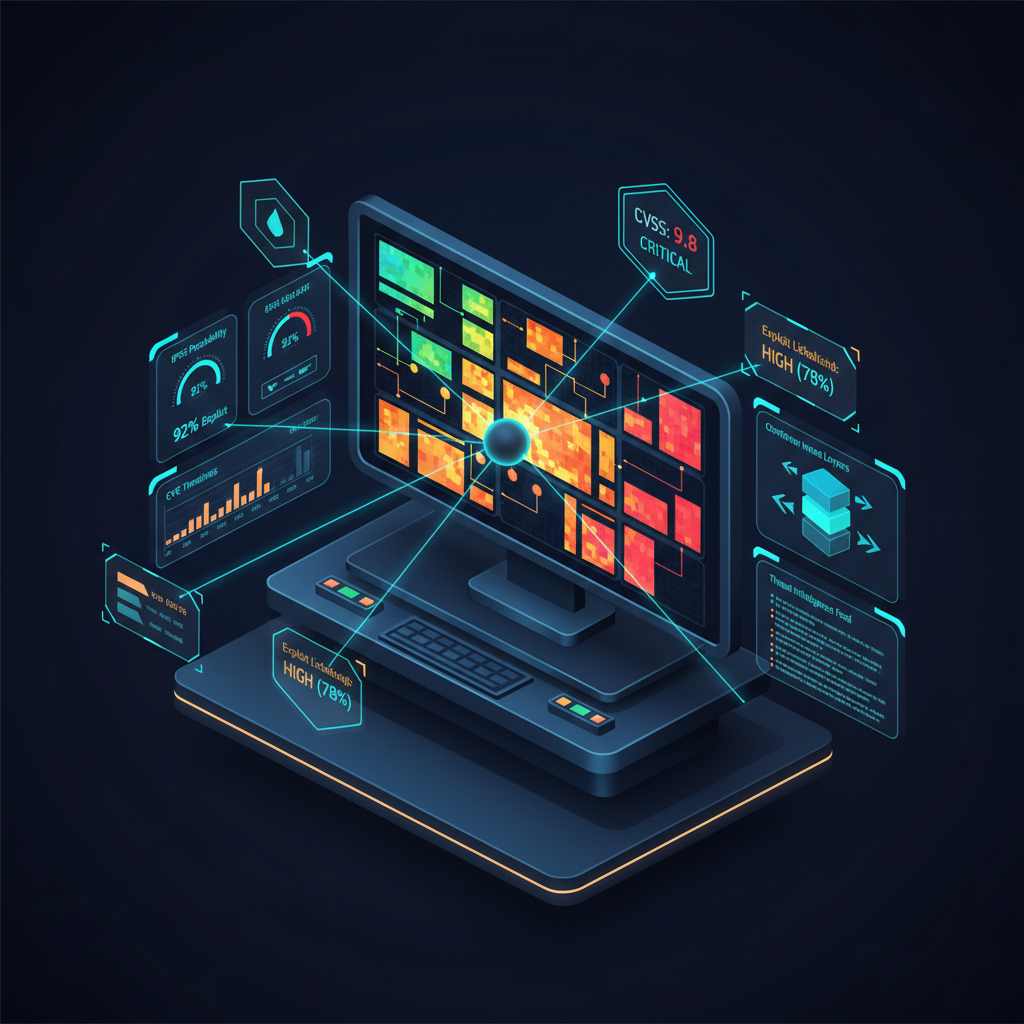
The Scanning Problem Nobody Talks About
Ninety-three percent of enterprise environments have at least one critical unpatched CVE sitting in production right now. That's not a prediction — that's from Tenable's 2026 State of Vulnerability Management report. The tools exist. The budgets exist. So why are security teams still drowning in vulnerability debt?
Because scanning is easy. Doing something useful with the results is hard. Most organizations run a Nessus scan on Monday, get 40,000 findings back, and spend the rest of the week arguing over which ticket to file first. That's not a vulnerability management program. That's vulnerability theater.
This guide is for the security engineer or AppSec lead who already knows what a CVE is and wants to actually fix things. We're covering the tool landscape, prioritization frameworks, container-specific scanning, and how to build a continuous scanning workflow that doesn't collapse under its own weight.
What Vulnerability Scanning Tools Actually Do — And What They Don't
Vulnerability scanners are essentially automated interrogation systems. They probe your systems — hosts, networks, containers, web applications, cloud configurations — and compare what they find against known vulnerability databases: NVD, CVE feeds, vendor advisories, and increasingly, proprietary threat intelligence.
What they don't do: tell you which of those 40,000 findings will actually get exploited in the next 90 days. That gap between detection and prioritization is where most programs fall apart. We'll get to EPSS scoring and risk-based triage shortly, but first, let's map the landscape.
Network Vulnerability Assessment Tools
Nessus Professional and Qualys VMDR are the incumbents here. Both do credentialed scanning beautifully — give them SSH or WMI access and they'll enumerate every missing patch, misconfiguration, and weak cipher suite on a host. Qualys edges ahead for enterprise-scale continuous scanning with its agent-based model; agents check in every few hours rather than waiting for scheduled scan windows.
OpenVAS (the open-source fork now maintained as Greenbone Community Edition) remains a solid option for teams with tight budgets. The detection coverage has improved substantially in 2026, though the UI still feels like it was designed in 2014. For network vulnerability assessment specifically, Rapid7 InsightVM brings in asset context that makes triage far more practical — you can filter findings by exposure score, asset criticality, and real-world exploit availability simultaneously.
Web Application Vulnerability Scanning
Web application vulnerability scanning deserves its own category because the threat model is fundamentally different. DAST tools like OWASP ZAP, Burp Suite Enterprise, and Invicti (formerly Netsparker) do dynamic testing — they actually interact with running applications and probe for injection flaws, broken access control, SSRF, and the rest of the OWASP Top 10. ZAP is free and excellent for CI/CD integration; Burp Enterprise justifies its cost with scan orchestration at scale.
The shift-left crowd tends to reach for SAST tools first, which is fine — static analysis catches flaws early. But SAST and DAST are complementary, not interchangeable. A SAST tool won't find a runtime configuration issue. A DAST tool won't catch a subtle logic flaw buried in business logic that only shows up during static analysis. Run both.
Container Security Scanning
Container image scanning has become non-negotiable. When your entire application stack ships as a container image, every vulnerable library in that image is a potential attack vector — and images can sit in registries for months accumulating CVEs before anyone notices.
Trivy, from Aqua Security, has become the de facto standard for open-source container scanning. It's fast, accurate, covers OS packages and language dependencies, and integrates cleanly into virtually any CI pipeline. Grype from Anchore is the other strong open-source option. Snyk Container adds developer-friendly remediation advice on top of detection. For enterprise environments with multi-registry setups, Container Image Scanning platforms that integrate directly with your registry and CI/CD pipeline are worth evaluating — the ability to enforce policy gates at build time is the difference between catching a CVE before deployment and chasing it in production.
One thing Trivy and Grype won't do out of the box: runtime detection. For what's actually running in your Kubernetes cluster, you need something like Falco or Sysdig Secure. Scanning images before deployment and monitoring runtime behavior are two distinct security controls — you need both.
CVE Prioritization: Stop Treating Every Critical as Equal
Here's the reality: NVD assigns a CVSS score to every CVE. A CVSS 9.8 looks terrifying. But CVSS measures theoretical severity, not actual exploitability in your environment. Roughly 6% of CVEs ever get a public exploit published. Of those, far fewer get weaponized in actual attacks against real targets. Treating every CVSS 9.8 as a five-alarm fire is how security teams burn out.
EPSS Scoring: Exploit Prediction in Practice
The Exploit Prediction Scoring System (EPSS) assigns each CVE a probability (0–1) of being exploited in the wild within the next 30 days, based on threat intelligence, proof-of-concept availability, and historical exploitation patterns. EPSS v3, released in 2023, significantly improved accuracy. In 2026, EPSS has become a standard prioritization input alongside CVSS.
The workflow that actually works: filter your scanner output by EPSS score above 0.1 (10% probability of exploitation), then apply CVSS as a severity tiebreaker, then apply asset criticality. You'll typically reduce a 40,000-item finding list to a few hundred actually actionable items. That's a manageable remediation sprint, not a years-long backlog.
CISA's Known Exploited Vulnerabilities (KEV) catalog is the other input you can't ignore. If a CVE is on the KEV list, it's not theoretical — it's being actively exploited. KEV supersedes EPSS for prioritization. Patch those first, full stop.
Risk-Based Vulnerability Management
Risk-based vulnerability management takes EPSS and KEV data and layers on business context: How critical is this asset? Is it internet-exposed? Does it process PII? Can an attacker reach it from an existing foothold? This is where Vulnerability Management platforms that integrate asset inventory with threat intelligence and exposure data earn their keep.
The blast radius concept matters here. A critical CVE on an air-gapped internal build server is lower priority than a medium CVE on an internet-facing API gateway that processes authentication tokens. CVSS won't tell you that. Your asset context will.
Attack Surface Management: Scanning What You Don't Know Exists
Traditional vulnerability scanners only find what you point them at. Attack surface management (ASM) starts from the attacker's perspective — what can they find from the outside? This includes forgotten subdomains, shadow IT, misconfigured cloud resources, and exposed development environments that your internal scanner never sees because they're not in the asset inventory.
Tools like Censys, Shodan, and commercial ASM platforms continuously monitor internet-facing assets for new exposures. Combined with Cloud Inventory that tracks every resource across your cloud accounts, you get a much more complete picture of your real attack surface.
The integration point between ASM and traditional scanning is where the magic happens. When your ASM platform discovers an unknown asset, it should automatically trigger a vulnerability scan of that asset. Manual processes break here — you need automation or the discovery-to-scan gap becomes an exploitation opportunity.
Continuous Vulnerability Scanning: Beyond the Weekly Scan
Scheduled scans are a 2015 approach. Your environment changes daily — new containers spin up, new code gets deployed, new dependencies get pulled in. A vulnerability that didn't exist on Monday can be introduced by a Thursday deployment and exploited by Friday.
Continuous scanning means different things depending on the layer. For hosts and VMs, agent-based scanners check in every few hours. For containers, scanning happens at image build time in the CI pipeline — every image, every build. For web applications, DAST scans run against staging environments on every significant code change. For cloud infrastructure, CSPM tools continuously monitor configuration drift against CIS Benchmarks and your own policy baselines.
The practical challenge with continuous scanning is alert volume. Running a Nessus scan once a week gives you one big pile of findings to sort. Scanning continuously gives you a constant stream. This is where risk-based prioritization becomes mandatory rather than optional — without it, continuous scanning just accelerates burnout.
Open Source Vulnerability Management: What's Viable in 2026
The open-source ecosystem for vulnerability management has matured significantly. Defect Dojo remains the go-to vulnerability management platform for aggregating findings from multiple scanners into a unified view. It integrates with Trivy, Nessus, Burp, ZAP, and dozens of other tools. It's not pretty, but it works.
For SBOM generation and dependency scanning, Syft (also from Anchore) generates CycloneDX and SPDX SBOMs from container images and filesystems. SBOM-based vulnerability scanning is becoming increasingly important as software supply chain attacks remain a top threat vector — if you know exactly what's in your software, you can respond immediately when a new CVE drops in a component you're using.
The limitation of open-source tooling is integration and orchestration. Individual tools are strong; making them work together at scale requires significant engineering investment. For teams without dedicated tooling engineers, commercial platforms that bundle scanning, prioritization, and workflow integration often deliver better ROI despite the licensing cost.
Patch Management Strategy: Closing the Loop
Vulnerability scanning without a patch management strategy is just a very expensive way to generate anxiety. The scan-to-patch cycle matters. IBM's 2026 Cost of a Data Breach report found that organizations with automated patch management reduced breach costs by an average of $1.2M compared to those relying on manual processes.
A workable patch management strategy for 2026 has a few non-negotiables. First, SLAs tied to risk tier: CISA KEV and EPSS-critical findings get patched within 24–72 hours; CVSS critical + high EPSS within 7 days; everything else within 30 days. Second, a tested rollback procedure for every patch — especially OS-level and database patches where compatibility issues can cause outages. Third, automation for commodity patching (OS updates, common libraries) so your team's manual effort is reserved for complex remediation that actually requires human judgment.
For cloud environments, VM Scans that integrate directly with your patch management workflow can dramatically reduce the time between detection and remediation. The integration point is the key — scanning and patching need to be connected processes, not siloed tools run by different teams.
Integrating Scanning Into the Development Lifecycle
The most effective vulnerability programs treat scanning as a developer workflow integration, not a security audit. When a developer gets a Slack notification that their PR introduced a CVE-2026-XXXX with a 0.45 EPSS score and a fix available in the next patch version of the dependency, they fix it immediately. When a security team files a ticket three weeks after deployment, it goes into the backlog and dies.
Static analysis integration through SAST in CI pipelines catches code-level vulnerabilities before they ever reach a scanner. Secret Detection in the same pipeline catches hardcoded credentials — a different vulnerability class, but one that scanners typically miss entirely. Layering these controls in the development pipeline is the shift-left approach that actually works.
The Vulnerability Management challenge in 2026 isn't detection. Detection is largely solved. The challenge is context, prioritization, and workflow integration — making sure that the right finding gets to the right person with the right context to fix it in the right timeframe. That's what separates mature programs from ones still drowning in scanner output.
Building a Realistic Vulnerability Management Program
A mature program in 2026 has these components working together: continuous asset discovery and inventory, automated scanning across hosts/containers/web apps/cloud configurations, EPSS + KEV-based prioritization, SLA-driven patch workflows, and metrics that matter (mean time to remediate by risk tier, not just total open findings).
Start with asset inventory. You can't secure what you don't know exists. Then build the scanning pipeline layer by layer — don't try to instrument everything on day one. Get agent-based host scanning running first, then layer in container scanning, then web application scanning. Crawl, then walk, then run.
The organizational piece matters as much as the technical piece. Vulnerability management only works when security, operations, and development teams share responsibility for remediation. Security finds it; ops and dev fix it. That handoff needs defined processes, clear SLAs, and tooling that supports collaboration — not just a vulnerability scanner and a prayer.