

Cloud Workload Protection in 2026: The Stakes Have Changed
Seventy-three percent of cloud breaches in 2026 now involve over-permissioned identities, according to the Cloud Security Alliance mid-year report. Not unpatched CVEs. Not misconfigured S3 buckets. Identities with too much access and no one watching. That number should force a hard look at how your organization thinks about cloud workload protection, because most legacy CWPP deployments were designed for a world that no longer exists.
The cloud threat surface has sprawled. Kubernetes clusters, serverless functions, ephemeral VMs, and managed AI services all run simultaneously across AWS, Azure, and GCP. Each of these is a potential blast radius waiting to be triggered. Attackers know it. Lateral movement through over-permissioned service accounts has become the preferred technique for cloud-native ransomware campaigns in 2026, displacing the classic exploit-based intrusion playbook entirely.
This guide cuts through the acronym fog: CWPP, CSPM, CIEM, CNAPP. We explain what each layer actually defends, where they overlap, where they fail, and how to combine them into something that actually works at runtime scale.
What Cloud Workload Protection (CWPP) Actually Does
CWPP focuses on the workload itself: virtual machines, containers, Kubernetes pods, serverless functions. The core job is runtime defense. Detect anomalous process execution, block unauthorized network connections, catch malicious behavior after a workload has been compromised.
Think of it as EDR for cloud infrastructure. Tools like Falco, Aqua Security, and Sysdig provide kernel-level visibility into what workloads are actually doing, not just what configuration they were supposed to have. That distinction matters enormously. A misconfigured container is a CSPM finding. A container that has been compromised and is exfiltrating data is a CWPP event.
Runtime detection is where CWPP earns its keep. The MITRE ATT&CK cloud matrix now catalogs over 90 techniques specific to cloud workload compromise: privilege escalation via container breakout, credential access from IMDS endpoints, persistence through cron-based backdoors. A CWPP solution that is not mapping behavioral signals to these techniques is leaving most of its detection surface dark.
What CWPP Is Not
CWPP does not handle configuration drift. It will not tell you that your EKS node group has public access enabled, or that an Azure VM managed identity has contributor rights at subscription scope. That is CSPM territory. And it will not tell you which IAM roles have permissions that far exceed what they use. That is CIEM. Conflating these three as a single cloud security bucket is exactly how teams end up with overlapping tool sprawl and coverage gaps at the same time.
CSPM: Posture, Not Runtime
Cloud Security Posture Management lives at the control plane. It continuously evaluates your cloud configurations against security benchmarks: CIS Benchmarks, NIST CSF 2.0, SOC 2 controls, and whatever custom policies your team has defined. When a Terraform apply enables public access on an RDS instance, CSPM catches it. When an auto-scaling event spins up a VM with an overly permissive security group, CSPM flags it.
The challenge in 2026 is configuration drift velocity. Infrastructure teams are deploying changes at a pace that makes manual review irrelevant. Our CSPM platform ingests configuration telemetry continuously, maps findings to compliance frameworks in real time, and surfaces the highest-risk drift before it becomes a breach headline. Static weekly scans simply do not work in a GitOps-driven environment.
Most commercial CSPM tools still struggle with multi-cloud drift at scale. They handle single-cloud environments reasonably well, but the correlation layer, understanding how a misconfiguration in AWS IAM interacts with a policy gap in Azure RBAC to create a cross-cloud blast radius, remains immature across the industry.
CWPP vs CSPM: Drawing the Line Clearly
Here is a simple test. If the problem exists even when no attacker is present, it is a posture problem and belongs to CSPM. If the problem only manifests when someone is actively abusing your environment, it is a runtime problem and belongs to CWPP. Both matter. Neither replaces the other.
Where teams go wrong is prioritizing one over the other based on vendor narrative rather than threat model. If your primary threat scenario is a supply chain compromise that introduces a malicious container image, CWPP behavioral detection is your first line. If your primary risk is regulatory non-compliance and audit failure, CSPM is where you spend the budget. In practice you need both, and the integration between them is where the real value lies.
For container-specific security, combining CSPM configuration checks with container image scanning and runtime behavioral monitoring gives you a defense-in-depth posture covering the full workload lifecycle: build, deploy, and runtime. Skip any of those layers and you have a gap that attackers will find before you do.
CIEM Security: The Identity Layer That Everyone Underestimates
Cloud Infrastructure Entitlement Management is the newest of the three disciplines and arguably the most underfunded. The premise is straightforward: in cloud environments, identities including human users, service accounts, machine identities, and federated roles accumulate permissions far beyond what they actually use. CIEM tools analyze the gap between granted permissions and used permissions, then help you reduce it.
The numbers are sobering. Gartner research in 2026 found that the average enterprise cloud environment has over 40,000 active machine identities, and fewer than five percent of them operate within least-privilege boundaries. The rest are over-permissioned by factors ranging from ten times to, in some cases, one thousand times. An attacker who compromises one of those identities through credential theft, SSRF exploitation, or a misconfigured OIDC trust immediately inherits an enormous blast radius.
Microsoft Entra Permissions Management
Microsoft Entra Permissions Management, formerly CloudKnox, is one of the more mature CIEM offerings in the market. It covers Azure, AWS, and GCP, providing permissions analytics, anomaly detection for identity activity, and automated right-sizing recommendations. If you are already deep in the Microsoft ecosystem it integrates naturally with Microsoft Defender for Cloud, which is essentially Microsoft CSPM combined with CWPP capabilities under one pane.
That said, Entra Permissions Management has real blind spots. Its cross-cloud identity correlation is still weaker than purpose-built CIEM tools, and its handling of Kubernetes service accounts and workload identity federation is limited. For organizations running complex multi-cloud Kubernetes deployments you will likely need supplemental tooling. Check our Microsoft Defender integration resources for guidance on fitting Entra into a broader cloud security stack.
What to Look for in CIEM Tools
When evaluating CIEM tools, four criteria matter most. First, coverage breadth: does it handle all your cloud providers including Kubernetes workload identities and managed service identities, not just IAM users? Second, detection fidelity: can it identify anomalous permission usage in real time, or only in batch analysis? Third, remediation workflow: does it generate least-privilege policies automatically and route them through your IaC pipeline for approval? Fourth, integration depth: does it share signals with your CSPM and CWPP layers so a suspicious identity activity can be correlated with a configuration anomaly?
The cloud security solutions landscape is evolving fast on this front. Several CNAPP vendors are now bundling basic CIEM capabilities into their platforms, which reduces tool sprawl but often delivers shallower analysis than dedicated CIEM tooling.
CIEM and CSPM: The Convergence Problem
There is an increasingly blurry line between CIEM and CSPM, and vendors are exploiting that confusion to sell platform consolidation. CSPM tools are adding identity misconfiguration checks: flagging IAM roles with wildcard permissions, unused access keys, MFA gaps. CIEM tools are adding configuration context to help prioritize identity risks. Both trends are positive, but do not mistake feature overlap for functional equivalence.
CSPM identity checks are typically static and rule-based: does this role have administrator permissions? CIEM analysis is behavioral and contextual: does this role have administrator permissions that it has never used, in a region it has never operated in, on resources it has never touched? The latter generates far fewer false positives and identifies genuinely high-risk entitlements rather than policy violations that may be intentional.
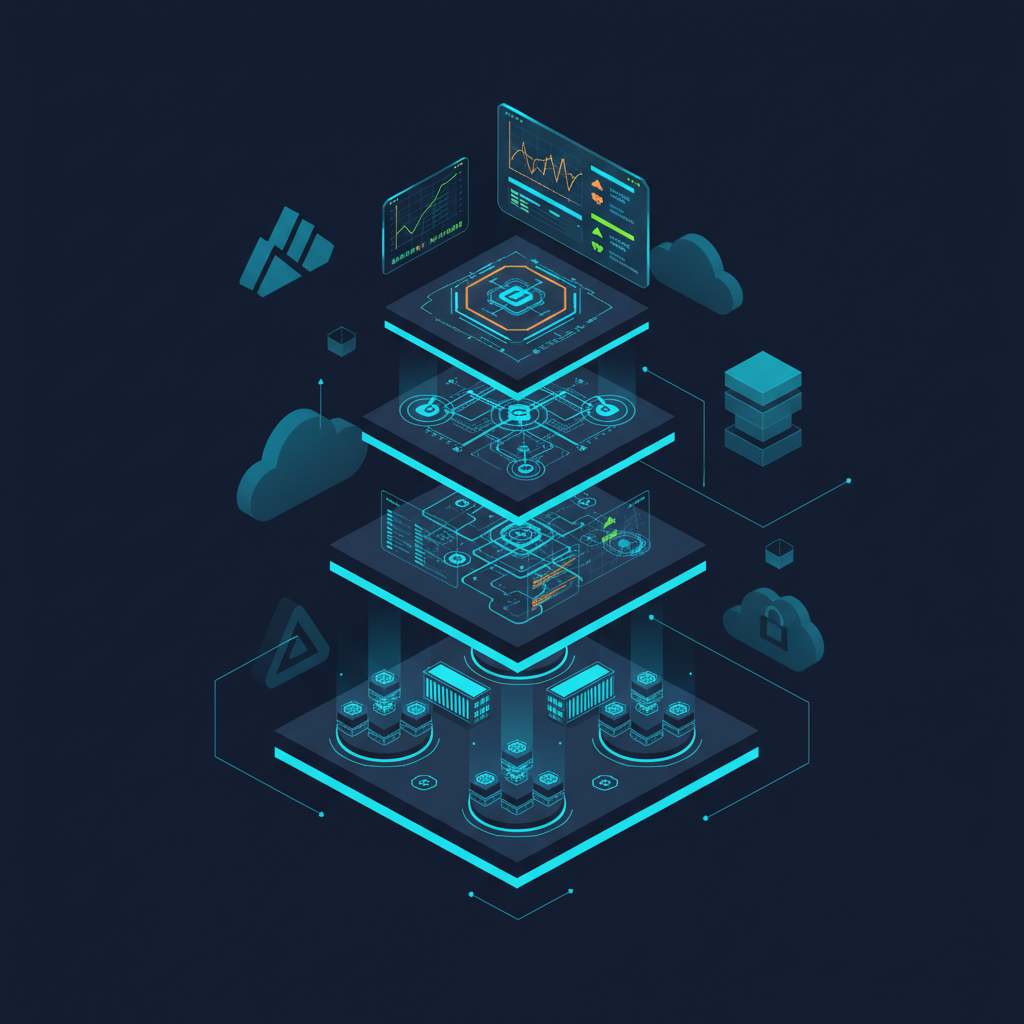
Building a Layered Cloud Workload Protection Architecture
Here is what a credible cloud workload protection architecture looks like in 2026, without the vendor marketing.
Layer 1: Secure the Build
Runtime security starts at build time. SAST, secret detection, and container image scanning integrated into your CI/CD pipeline catch vulnerabilities, hardcoded credentials, and known-vulnerable base images before they reach production. This is shift-left in its most practical form: not a philosophy, but a gate in your pipeline.
Layer 2: Enforce Configuration Standards
Policy-as-Code enforces security guardrails at the infrastructure provisioning layer. Before any Terraform plan applies, policies verify that network exposure, encryption settings, logging configurations, and IAM policies meet your security baselines. Violations get blocked at the source rather than detected after deployment. CSPM then provides continuous visibility for the configuration state of what is already running.
Layer 3: Manage Identities at Minimum Privilege
CIEM operates continuously across your identity estate. Quarterly access reviews are dead. The velocity of cloud identity creation and role modification makes manual review irrelevant. Automated entitlement analysis, anomaly detection on usage patterns, and programmatic least-privilege enforcement are the only approaches that scale.
Layer 4: Detect and Respond at Runtime
CWPP behavioral monitoring combined with cloud-native threat detection from AWS GuardDuty, Microsoft Defender for Cloud, and GCP Security Command Center provides the runtime layer. Map alerts to MITRE ATT&CK techniques. Establish response playbooks per technique family. Integrate runtime alerts with your SIEM and SOAR stack so high-confidence detections trigger automated isolation or credential revocation without waiting for a human to click through a dashboard.
The VM scans capability rounds out the picture for traditional workloads with continuous vulnerability assessment across your VM fleet, prioritized by exploitability using EPSS scores rather than CVSS severity alone, so your patching effort concentrates on the CVEs that actually get weaponized in the wild.
Microsoft CSPM: Defender for Cloud in Context
Microsoft CSPM delivered through Defender for Cloud has matured significantly in 2026. Its attack path analysis, which correlates misconfigurations, vulnerable workloads, and over-permissioned identities into exploitable paths, is genuinely useful for prioritizing remediation. The integration with Microsoft Entra for identity risk correlation gives it an advantage in Azure-centric environments that no third-party tool can fully replicate.
But it is not a complete solution for multi-cloud environments. AWS and GCP coverage in Defender for Cloud is improving but still lags behind native tooling and specialized CNAPPs. If more than thirty percent of your workloads run outside Azure, plan your architecture accordingly.
What Most Teams Get Wrong
They buy tools. They do not build programs. A CWPP license without operationalized detection logic is noise. A CSPM deployment that surfaces ten thousand findings with no prioritization framework creates alert fatigue that is worse than no tool at all. CIEM analysis that generates least-privilege recommendations but has no IaC workflow to implement them sits in a report that no one reads.
Cloud workload protection is an operational discipline, not a product category. The technology is a prerequisite, not a solution. Build the processes first: triage workflows, remediation SLAs, escalation paths, regression testing for security controls. Then add tooling to support those processes. Vulnerability management programs that embed these workflows see mean-time-to-remediate drop by sixty to seventy percent compared to tool-first approaches.
Practical Starting Points for 2026
If you are building or rebuilding your cloud workload protection posture this year, start with a complete cloud inventory. You cannot protect what you cannot see, and cloud asset sprawl remains the most consistently underestimated problem in enterprise cloud security. Enumerate every workload, every identity, every data store, and every network path. Then run your CSPM and CIEM analysis against that baseline. The findings will prioritize themselves.
Then harden your build pipeline. Most organizations over-invest in runtime detection and under-invest in preventing vulnerable workloads from deploying in the first place. Shifting security left through SAST, secret detection, and image scanning reduces the runtime attack surface before it materializes.
Finally, rationalize your identity estate. Pick one CIEM tool, run it for ninety days in observation mode, and review the permission reduction opportunities it surfaces. The average enterprise can eliminate sixty to seventy percent of excessive permissions without disrupting any legitimate workload. That is a dramatic reduction in blast radius from a single focused effort.
The threat landscape is not getting simpler. But a layered cloud workload protection architecture built around CWPP, CSPM, and CIEM working in concert gives you a defensible posture against the attack techniques that are actually being used against cloud environments today. Cloud security is not a checkbox. It is a continuous operational commitment.