

Container Images Are Shipping Vulnerabilities at Scale
Roughly 84% of container images pulled from public registries in 2026 contain at least one known CVE. That statistic is no longer surprising. It is simply the baseline reality of containerized infrastructure. The real question is not whether your images are vulnerable. They almost certainly are. The question is whether you are finding those vulnerabilities before attackers do, and whether you are doing it fast enough to matter in a CI/CD pipeline that deploys dozens of times per day.
Container scanning tools have matured significantly since the early Clair-and-pray era. Today's tools can parse OS package manifests, language-specific dependency graphs, Dockerfile misconfigurations, secrets embedded in layers, and generate SBOMs (Software Bill of Materials) that feed directly into compliance workflows. But not all tools are equal, and picking the wrong one means either drowning in noise or missing critical findings entirely. This guide cuts through the marketing and gives you a real breakdown of the tools worth considering in 2026.
What Container Image Scanning Actually Does
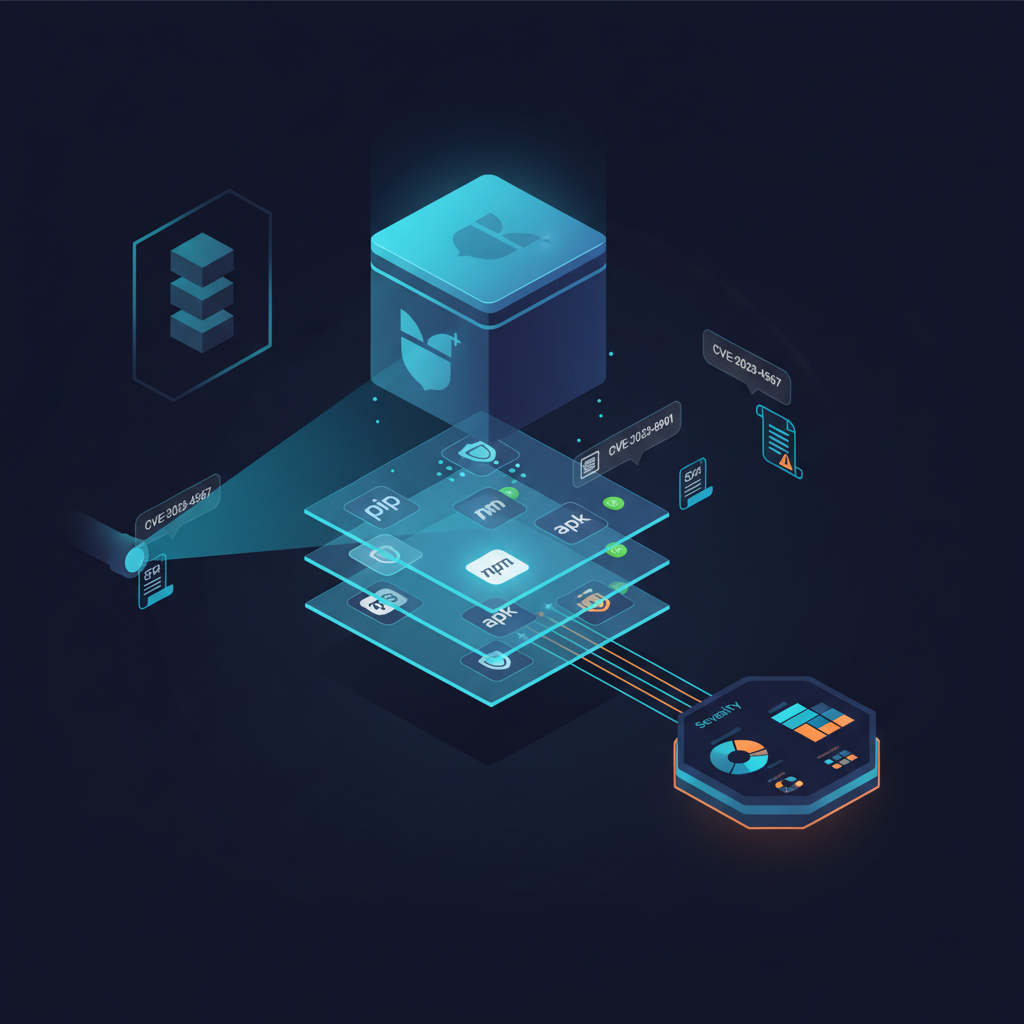
Container image scanning is the process of statically analyzing a container image including its filesystem layers, package manifests, binaries, and configuration to identify known vulnerabilities, misconfigurations, embedded secrets, and policy violations. It operates on the image artifact itself, not on a running container. That distinction matters enormously.
Static image scanning will catch CVEs in your base OS packages, outdated language runtimes, misconfigured EXPOSE directives, and hardcoded credentials baked into layers. What it will not catch is runtime behavior such as lateral movement attempts, privilege escalation via mounted hostPath volumes, or malicious processes spawned after deployment. You need runtime security tools like Falco for that. Container scanning is a shift-left control and belongs in your pipeline.
A mature vulnerability management program treats container image scanning as one layer in a broader detection strategy, not a silver bullet. Pair it with SAST, secret detection, and infrastructure policy enforcement for real depth of coverage.
The Criteria That Actually Matter
Before comparing specific tools, here is what separates genuinely useful container scanning tools from checkbox security theater:
- Database freshness and breadth: How quickly does the tool pull new CVEs from NVD, vendor advisories, and OS-specific sources like Debian Security Tracker or Red Hat OVAL? A 48-hour lag on a critical CVE is a real problem.
- False positive rate: Tools that flag every CVE regardless of exploitability will get ignored by developers. Look for tools that surface EPSS scores or VEX data to prioritize what actually needs fixing.
- SBOM generation: CycloneDX and SPDX output is increasingly required for compliance, especially under CISA guidance and EU CRA obligations taking shape in 2026.
- CI/CD integration depth: Native GitHub Actions, GitLab CI, and Jenkins plugins matter. So does the ability to enforce hard-fail thresholds on critical severity findings without breaking developer workflows unnecessarily.
- Registry and runtime coverage: Can it scan images in ECR, GCR, ACR, and Docker Hub? Does it support OCI artifacts beyond standard Docker images?
The Best Container Scanning Tools in 2026
Trivy (Aqua Security)
Trivy remains the most widely deployed open-source container image scanning tool in 2026. It is fast, it is accurate, and it scans far more than just OS packages. Trivy covers OS packages across Alpine, Debian, Ubuntu, RHEL, and more; language dependencies in Go, Python, Node.js, Ruby, Java, and Rust; Dockerfile misconfigurations; Kubernetes manifests; Terraform and CloudFormation IaC; and SBOM generation in CycloneDX and SPDX formats.
Trivy's vulnerability database pulls from NVD, GitHub Security Advisories, and dozens of OS-specific feeds. The EPSS score integration is genuinely useful for prioritization. Instead of a flat list of 300 CVEs sorted by severity, you can filter to the handful with meaningful exploitation probability. For teams running a cloud security program at scale, Trivy integrates cleanly into both push-to-registry and pull-request workflows. It is a strong baseline, especially when paired with a platform that aggregates findings across your entire container estate.
Snyk Container
Snyk Container is the commercial answer for teams that need developer-friendly UX alongside enterprise policy controls. Its strength is context. Snyk does not just tell you a CVE exists. It tells you whether a fix is available, which base image upgrade would resolve it, and what the reachability impact is in your specific codebase. That reachability analysis capability is genuinely differentiating.
The base image recommendations feature deserves a callout. If your Dockerfile is built on ubuntu:20.04 and there is a slimmer, less vulnerable alternative, Snyk will surface it with a side-by-side CVE count comparison. That is the kind of actionable output developers actually act on. Snyk also handles SBOM generation and integrates with major registries and CI systems. The downside is cost. Snyk's container module is not cheap at enterprise scale, and the pricing model can become opaque as container counts grow.
Grype (Anchore)
Grype is Anchore's standalone, open-source vulnerability scanner, and it pairs naturally with Syft for SBOM generation. The Syft and Grype workflow has become a standard reference architecture in supply chain security circles. Syft generates a detailed SBOM and Grype scans it for known CVEs. This separation of concerns is architecturally clean and makes it easy to store SBOMs as attestations alongside image digests in registries.
Grype's matching logic handles CPE-based matching alongside PURL-based matching, which reduces false positives compared to tools that rely on a single matching strategy. If you are building a custom vulnerability pipeline or need fine-grained control over the scanning workflow, Grype gives you more flexibility. For teams already invested in the Anchore Enterprise ecosystem, this is the natural choice.
Docker Scout
Docker Scout, Docker's native advisory and scanning product, has matured into something genuinely useful, particularly for teams already deep in the Docker Hub ecosystem. Its policy evaluation features let you define and enforce image health policies across your organization. The CVE database integration and the fix-available filtering are solid. Scout also surfaces SBOMs and integrates with Docker Desktop for local scanning workflows.
The limitation is ecosystem lock-in. Scout is strongest when your entire workflow runs through Docker Hub. If you are using ECR, GCR, or a private Harbor registry as your primary store, Scout becomes less compelling relative to registry-agnostic tools like Trivy or Grype.
Wiz Container and Registry Scanning
Wiz is not a standalone container scanner. It is a cloud-native security platform that includes container registry scanning as part of its broader CNAPP offering. But it deserves mention because its approach to container risk is fundamentally different from file-based scanners. Wiz correlates container image vulnerabilities with runtime context. Is this vulnerable container actually running? Does the running container have network exposure? Is the vulnerable package actually executed at runtime?
That runtime context dramatically reduces the signal-to-noise ratio. A critical CVE in a package that is never loaded at runtime is very different from the same CVE in an actively called library on a publicly exposed service. Wiz integrates with ECR, GCR, ACR, Docker Hub, and Harbor natively. The trade-off is cost and complexity.
SECRAILS Container Image Scanning
For teams that need container image scanning integrated natively into a broader cloud security posture, container image scanning from SECRAILS provides vulnerability detection, misconfiguration analysis, and SBOM generation within the same platform that handles CSPM, secret detection, and SAST. The advantage of a unified platform is correlation. A secret embedded in a container layer that also has internet exposure and a known CVE in its runtime is not three separate alerts. It is one prioritized risk chain.
This kind of cross-signal correlation is where standalone scanners structurally cannot compete. When your container scanning findings feed into the same risk graph as your cloud inventory and posture data, prioritization becomes grounded in actual exposure rather than theoretical severity scores.
Docker Container Scanning: CI/CD Integration Patterns
The best container scanner in the world is useless if nobody runs it. Enforcement matters as much as detection capability. Here are the patterns that actually work in production pipelines.
Scan on Build, Block on Critical
Run your scanner as part of the image build step immediately after docker build and before push. Fail the pipeline on CRITICAL severity findings with a fix available. This is the minimum viable gate. For HIGH severity, consider a policy that blocks unless a VEX justification or suppression is documented. Never fail on every CVE indiscriminately. You will either annoy your teams into disabling the gate or create a mountain of suppression debt that means nothing.
Scan on Push to Registry
Add a second scanning layer at the registry level. Many enterprise registries including Harbor, ECR with Inspector, and Artifact Registry support scan-on-push natively. This catches images that bypassed the CI gate and provides a continuous re-scan capability as new CVEs are disclosed against existing images. A container image that was clean six months ago might be critical today.
Continuous Re-Scan for Running Images
This is where most teams fall short. Your Kubernetes cluster is running 200 container images. 180 of them have not been rebuilt in three months. New CVEs are being published every day. You need a mechanism to detect when a running image's vulnerability posture changes without requiring a rebuild cycle. Platforms that integrate VM scans and container scanning with your cloud inventory provide this continuously.
SBOM Generation: No Longer Optional
Software Bill of Materials generation has moved from a nice-to-have to a regulatory expectation in 2026. CISA's secure software development guidance, the EU Cyber Resilience Act, and an increasing number of enterprise procurement requirements now expect SBOMs for software artifacts including container images. CycloneDX 1.5 and SPDX 2.3 are the dominant formats. Make sure your chosen tool supports at least one of them in machine-readable output.
The SBOM workflow worth implementing is to generate an SBOM with Syft or Trivy at build time, sign it with Cosign, and attach it as an OCI attestation alongside the image digest. This gives you a tamper-evident, version-pinned artifact inventory that you can query at any point in the future. Couple this with a policy-as-code enforcement layer that validates SBOM presence before deployment, and you have a defensible supply chain control.
Benchmarks and Frameworks to Align With
Container security scanning does not exist in a vacuum. Align your scanning strategy with established benchmarks to ensure you are covering the right ground. The CIS Docker Benchmark and CIS Kubernetes Benchmark define baseline configuration security. Most scanners can check against these. NIST SP 800-190 provides the authoritative US federal guidance on container security controls. MITRE ATT&CK container-specific technique coverage is useful for mapping scanner findings to attacker TTPs. If you are operating under NIS2, EU CRA, or FedRAMP, SBOM and vulnerability disclosure requirements will shape which scanner capabilities are non-negotiable.
Making the Right Choice
There is no single best container scanning tool. There is only the best fit for your pipeline, team maturity, and compliance requirements. For open-source teams with lean budgets and high DevSecOps maturity, Trivy or the Syft and Grype combo is the right call. For developer-centric organizations that need actionable guidance and reachability analysis, Snyk Container is compelling. For enterprise cloud-native environments where container risk needs to be correlated with cloud posture and runtime context, a unified platform like SECRAILS provides the most complete picture.
Whatever you choose, the configuration matters as much as the tool. Define your severity thresholds. Document your VEX justifications. Integrate SBOM generation from day one. Run continuous re-scans. And treat container image scanning not as a compliance checkbox, but as a genuine signal in your overall vulnerability management program.