

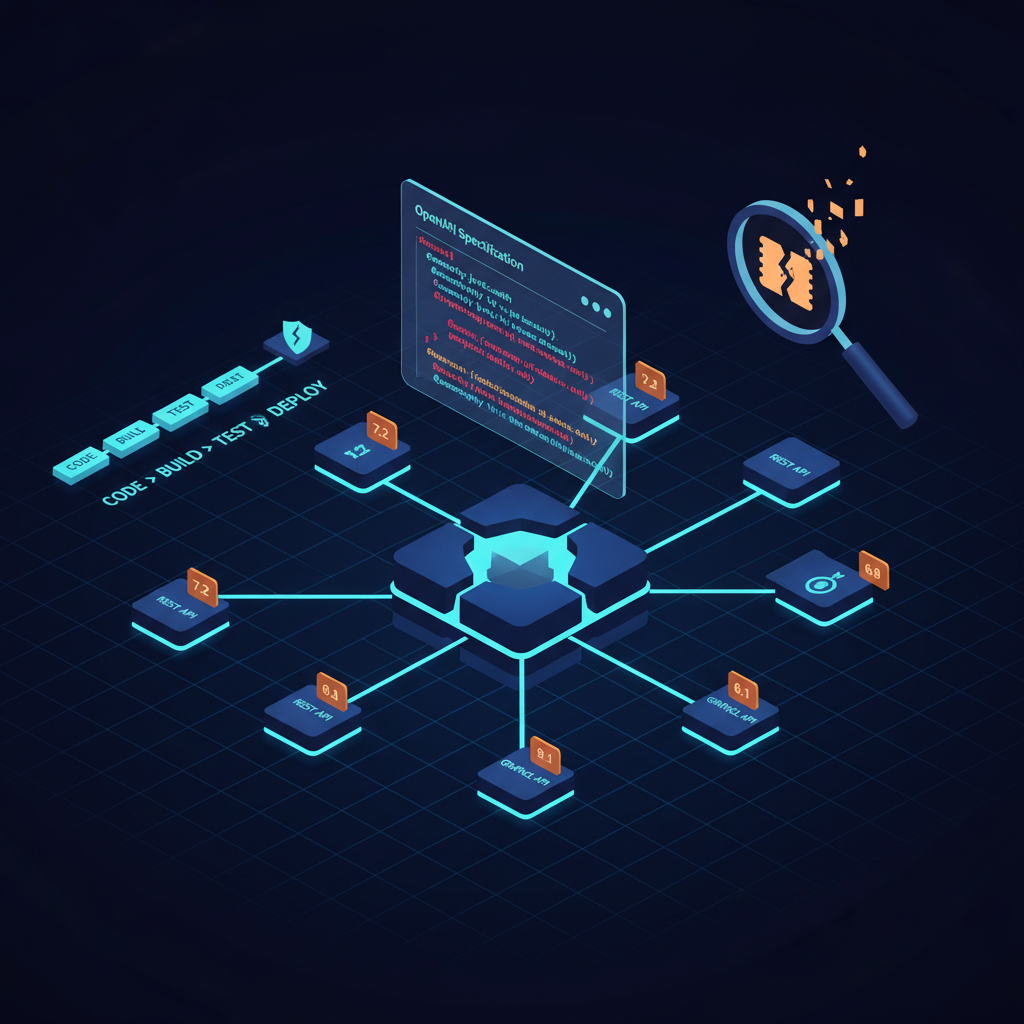
APIs Are the New Attack Surface — and Most Teams Are Behind
Salt Security's 2026 State of API Security report found that 94% of organizations experienced an API security incident in the prior twelve months. Not a misconfiguration. Not a theoretical risk. An actual incident. Meanwhile, the average enterprise now exposes over 15,000 API endpoints — many undocumented, many forgotten, almost all under-tested.
The problem isn't awareness anymore. Most security teams know APIs are a critical exposure vector. The gap is execution: selecting the right tools, running them at the right points in the pipeline, and actually acting on what they find. This guide cuts through the noise and gives you a practical breakdown of the best API security testing tools available in 2026, how they map to the OWASP API Security Top 10, and what a real testing workflow looks like inside a mature DevSecOps pipeline.
Why API Security Deserves Its Own Tooling Category
Traditional web app scanners were built for HTML forms and session cookies. APIs — REST, GraphQL, gRPC — behave differently. They expose business logic directly. They often skip the presentation layer entirely. DAST tools that rely on crawling the DOM simply miss the majority of attack surface in a modern microservices architecture.
Broken Object Level Authorization (BOLA), the top entry on the OWASP API Security Top 10, is a perfect example. A scanner that doesn't understand the semantic difference between GET /users/123 and GET /users/456 won't flag the authorization gap between them. You need tooling that understands API schemas, can replay requests with modified identifiers, and can reason about access control logic — not just pattern-match against known injection strings.
This is exactly why the tooling landscape has bifurcated: there are general-purpose vulnerability scanners with API modules bolted on, and then there are purpose-built API security platforms. Both have a place in your stack, but you need to know which job each one is suited for.
OWASP API Security Top 10 — The Risk Framework That Drives Your Checklist
Before picking tools, you need a risk model. The OWASP API Security Top 10 (updated in 2023 and still the dominant reference in 2026) is the closest thing to a universal standard for API threat categorization. Here's how the top risks map to testing activities:
API1 — Broken Object Level Authorization (BOLA)
The most common and most exploited. Testing requires authenticated request replay with swapped object identifiers. Manual testing or specialized BOLA-aware tools like Astra Security or StackHawk are more effective here than generic scanners.
API2 — Broken Authentication
Weak token validation, predictable session IDs, JWT algorithm confusion attacks. Tools like jwt_tool and Burp Suite Pro with custom authentication checks are standard here. Check for alg: none exploits — they're still showing up in production APIs in 2026.
API3 — Broken Object Property Level Authorization
Mass assignment vulnerabilities. An attacker sends extra fields in a POST body and the API blindly persists them — including fields like isAdmin: true. Testing requires schema-aware fuzzing.
API4–10 — The Rest of the List
Unrestricted Resource Consumption (rate limiting gaps), Broken Function Level Authorization (accessing admin endpoints as a regular user), Server-Side Request Forgery, Security Misconfiguration, Injection flaws, Improper Inventory Management, and Unsafe Consumption of APIs. Each requires different tooling. No single scanner covers all ten effectively.
The Best API Security Testing Tools in 2026
OWASP ZAP (Zed Attack Proxy)
Still the most widely deployed open-source DAST tool for APIs. ZAP's API scan mode (driven by OpenAPI, SOAP, or GraphQL definitions) is genuinely solid for automated pipeline integration. The containerized version makes it trivial to drop into a CI/CD stage. Limitation: it struggles with BOLA and business logic flaws — anything requiring semantic understanding of object relationships.
Best for: CI/CD-integrated baseline scanning, injection testing, security misconfiguration checks. Free. Open source. Maintained by the OWASP Foundation.
Burp Suite Pro
The gold standard for manual API security testing. Burp's Intruder, Repeater, and Sequencer modules give you fine-grained control for testing authentication flows, authorization bypasses, and fuzzing. The BApp Store extensions — particularly Autorize and JWT Editor — extend it well into API-specific territory. Not designed for automated pipeline scanning, but for deep-dive assessments, nothing matches it.
StackHawk
Purpose-built for DevSecOps teams. StackHawk runs DAST scans against running API environments using OpenAPI and GraphQL schemas as its guide. It integrates directly with GitHub Actions, GitLab CI, and Jenkins, and surfaces results inside pull request workflows. Paid, but the developer experience is genuinely better than trying to script ZAP for the same outcome.
Postman + Collection Runner
Not a security tool by origin, but Postman with custom security test scripts (using the pm.test framework) can cover a surprising portion of an API security testing checklist. Combined with Newman for CI integration, it handles authentication token validation, response field exposure checks, and rate limiting tests effectively. The advantage: your developers are already using it.
Nuclei (ProjectDiscovery)
A template-based vulnerability scanner with a rapidly growing library of API-specific checks. The community template library covers known CVEs, misconfigurations, and exposure patterns across popular API frameworks. Fast, lightweight, pipeline-friendly. Nuclei has become a standard fixture in bug bounty workflows and internal red team toolkits alike.
Astra Pentest
A commercial platform with a strong focus on BOLA and BFLA detection and authenticated scanning. Astra's continuous testing model — where the scanner runs against your staging environment on a schedule — aligns well with how fast API surfaces evolve in agile development shops.
42Crunch API Security Audit
Takes a design-first approach. Analyzes your OpenAPI specification for security weaknesses before you even run a test. Flags issues like missing authentication definitions, overly permissive CORS, and weak schema validation rules directly in the spec. Integrates with VS Code and CI pipelines. Pairs well with a SAST approach for code security — catching API contract issues at the design stage rather than after deployment.
Trivy (Aqua Security)
Primarily known as a container scanner, but Trivy's secret detection and misconfiguration scanning capabilities extend usefully to API-related infrastructure. If your API gateway configuration lives in IaC files, Trivy will catch common misconfigurations there. It complements purpose-built API scanners rather than replacing them.
API Security Testing Checklist — What to Actually Test
Tools are only as good as the test cases driving them. Here's a condensed API security testing checklist mapped to the OWASP Top 10 categories that every team should be running:
- Authentication: Token expiry enforcement, JWT algorithm validation (
alg: none, RS256/HS256 confusion), OAuth scope restrictions, API key entropy and rotation policies. - Authorization: BOLA — swap object IDs across authenticated users. BFLA — access admin-level endpoints with non-admin tokens. Mass assignment — inject extra fields in POST and PUT bodies.
- Input Validation: SQL injection, NoSQL injection, SSRF via URL parameters, XXE in XML-accepting endpoints, GraphQL introspection and batching attacks.
- Rate Limiting: Verify 429 responses under load. Test whether limits apply per-user or per-IP (per-IP limits are trivially bypassed with IP rotation).
- Data Exposure: Check response bodies for fields that shouldn't be returned — internal IDs, password hashes, PII beyond what the endpoint requires.
- Security Headers: CORS misconfiguration (wildcard origins on credentialed requests), missing Content-Type enforcement, absence of HSTS.
- Error Handling: Stack traces in 500 responses, verbose error messages exposing framework versions or internal paths.
- Inventory: Enumerate shadow APIs and deprecated endpoints not in the official spec. These are frequently the path of least resistance for attackers.
Integrating API Security Testing Into Your DevSecOps Pipeline
Shift-left isn't just a slogan — it's a structural requirement when APIs ship multiple times a week. Running a manual penetration test once a quarter against an API surface that changes daily is security theater. Here's what a mature integration looks like:
Pre-commit / Design Phase
42Crunch API Audit or Spectral for OpenAPI linting with security rules. Catch authentication gaps and schema weaknesses before the first line of implementation code is written. This pairs naturally with SAST scanning for the underlying code — catching both the contract and the implementation simultaneously.
Pull Request / Build Phase
ZAP in API scan mode or StackHawk against a short-lived ephemeral environment spun up for the PR. Results surface as PR comments. The team sees security findings in the same place they see failing unit tests. Secret Detection should also run here — API keys committed to source code are among the top initial access vectors in breach reports.
Staging / Pre-production Phase
Full authenticated scans with Burp Suite automation scripts or Astra. BOLA testing with multiple test user accounts. Rate limiting validation. This is your deepest automated check before code ships.
Production Monitoring
Runtime API security monitoring (Salt Security, Traceable, Noname) analyzes live traffic for behavioral anomalies — credential stuffing patterns, parameter enumeration, unusual object access patterns. This catches what pre-deployment testing misses: logic flaws that only manifest under real-world usage patterns.
For teams managing multi-cloud environments, connecting API security posture to broader cloud security controls — particularly around API gateway configurations and IAM policies — gives you a more complete picture. An API that's clean from a vulnerability scanner perspective can still be dangerously exposed if the IAM policy on the underlying service is overly permissive.
Open-Source API Security Testing Tools Worth Knowing
Not every team has budget for commercial tooling. The open-source ecosystem is genuinely strong here:
- OWASP ZAP — already covered above. Still the best free option for automated DAST.
- jwt_tool — specialized JWT testing. Tests for algorithm confusion, weak secrets, claim manipulation. Essential for any API using JWT authentication.
- Arjun — HTTP parameter discovery. Finds hidden parameters in API endpoints that aren't in the documentation.
- kiterunner (kr) — brute-forces API routes using wordlists derived from common frameworks. Excellent for finding undocumented endpoints.
- RESTler (Microsoft Research) — stateful REST API fuzzer that infers API usage rules from the OpenAPI spec and generates sequences of requests to test business logic dependencies.
- GraphQL Cop — dedicated GraphQL security testing. Checks for introspection exposure, field suggestions, batch attacks, and depth limit bypasses.
These tools, wired together with a proper vulnerability management workflow, give even a resource-constrained team a credible API security program without significant licensing spend.
What Good API Security Posture Actually Looks Like
Beyond tooling, API security posture comes down to a few structural disciplines. Maintain an accurate API inventory — if you don't know an endpoint exists, you can't test or monitor it. Enforce authentication and authorization at the API gateway layer, not just in application code. Version your APIs and have a deprecation policy with teeth — abandoned v1 endpoints are a persistent source of BFLA vulnerabilities. Apply the principle of least privilege to API keys and OAuth scopes. And treat API schema definitions (OpenAPI specs) as security artifacts that live in version control and get reviewed like code.
Teams that have embedded these practices alongside automated scanning consistently see lower mean time to remediation on API vulnerabilities. The tooling matters, but the process surrounding it matters more.
At SECRAILS, we've seen organizations dramatically reduce their API attack surface by connecting API security findings to their broader posture management program — correlating scanner output with cloud configuration data, IAM analysis from CSPM, and runtime behavioral signals into a unified risk view. The tools listed here are strong individually. The real force multiplier is connecting them.
Selecting the Right Tools for Your Team
If you're building out your API security testing capability from scratch in 2026, here's a practical starting point: ZAP for automated pipeline scanning, Burp Suite Pro for manual assessments and deep dives, jwt_tool and Arjun for targeted authentication and parameter testing, and 42Crunch for design-phase linting of your OpenAPI specs. Layer in Nuclei for known-vulnerability coverage and a runtime monitoring solution once your traffic volume justifies the investment.
Don't fall into the trap of buying the most expensive platform and running it quarterly. Frequent, lightweight automated scans integrated into your PR workflow will catch more real vulnerabilities than an annual manual pentest — even a thorough one. API surfaces change too fast for periodic assessment cycles to be your primary control.
The OWASP API Security Top 10 gives you the risk model. The tools above give you the execution capability. What you need to build is the discipline to run them consistently, act on what they find, and treat your API inventory as a living security artifact rather than an afterthought in your documentation.